Sunday, November 27, 2022

Mighty Good Ethiopian Natural from Dehab's Diamond

Nov. 28, 2022

David Myers (right) at CRG retreat.

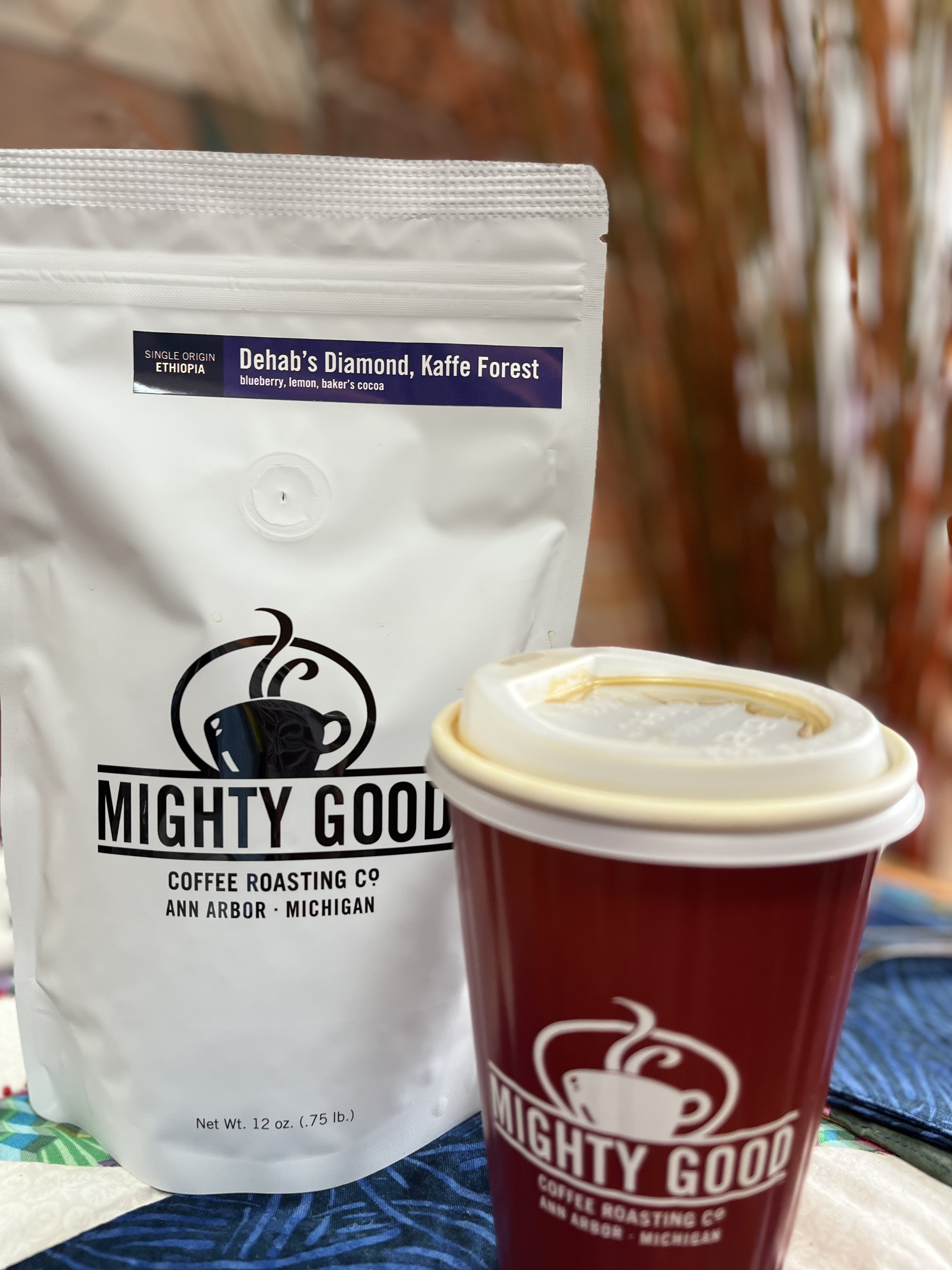
Mighty Good Coffee has been roasting up some of Ann Arbor's finest coffee since 2006 when David Myers and his friend, Jim Levinsohn, started the business. They offer beans from select farms, mills and co-ops, which they visit when they can. They roast in small batches on their Loring, and package quickly to preserve freshness. They're coffee is mighty good, we're sure you'll agree, but you'll also love their business philosophy. David and his partners try to combine family traditions, artisanal craft processes, local community and fantastic coffee. 

The business philosophy led Mighty Good to become one of the first customers of our Dehab's Diamond, Ethiopian natural coffee in 2021. It was Artisan's first year to import from Ethiopia and it was Dehab's first year to export to the USA! Her company had only exported to Europe in the past. David knew his customers love Ethiopian coffee, so it was a reasonable bet to think this one, from another Ann Arbor small business, would gain a fan base.


We're happy to see that so far, it seems to be working out that way. With the recent arrival of the 2022 season coffee, Mighty Good is one of handful of roasters who have purchased Dehab's Diamond Ethiopian Natural two years in a row now. We're mighty glad to see this coffee becoming an Ann Arbor favorite thanks to David and his team!

****

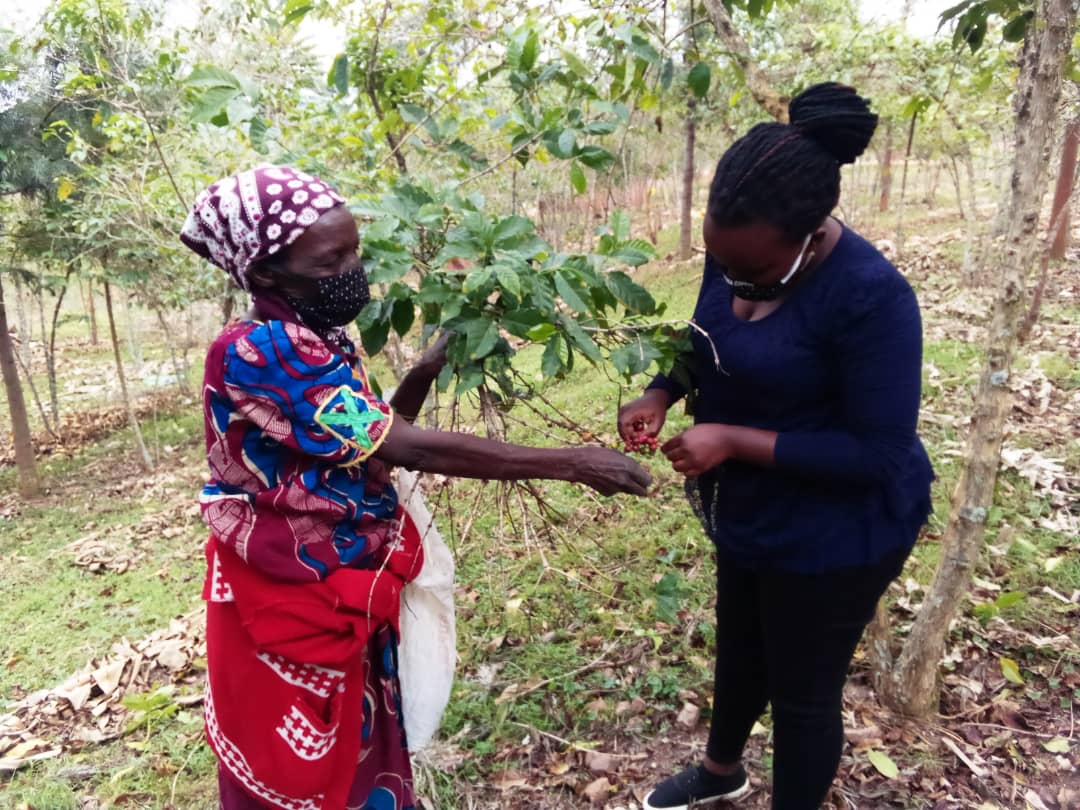
Dehab first started learning about coffee in 2021 and found she loved it! She truly enjoys developing the farm and the quality of her coffee. Today she continues as a an example of how more and more Ethiopian women are leading coffee businesses, whether it's producing, exporting or roasting in-country for Ethiopia's large domestic demand for coffee. Dehab is not a roaster, but her company, Diamond PLC, is a producer and exporter.

Her story in coffee starts when the farm was purchased in 1999 and Dehab’s husband and his friend started the business. She stayed out of it at first. But after 12 years years, when Dehab’s children were older, she took over the friend’s role and bought his shares. Now the farm is 27% and 73% owned between Dehab and her husband.

Dehab fell in love with the farm, farming and coffee. In every home in Ethiopia, the first meal is coffee. She remembers boiling the coffee for her mother. To get up to speed on agronomy, she employed a business consultant and an agronomist and spent two years “learning coffee.” In 2014 she started managing the company. In 2015, she started exporting to Germany. Since 2021, Artisan Coffee Imports is proud to be counted among her partners.  
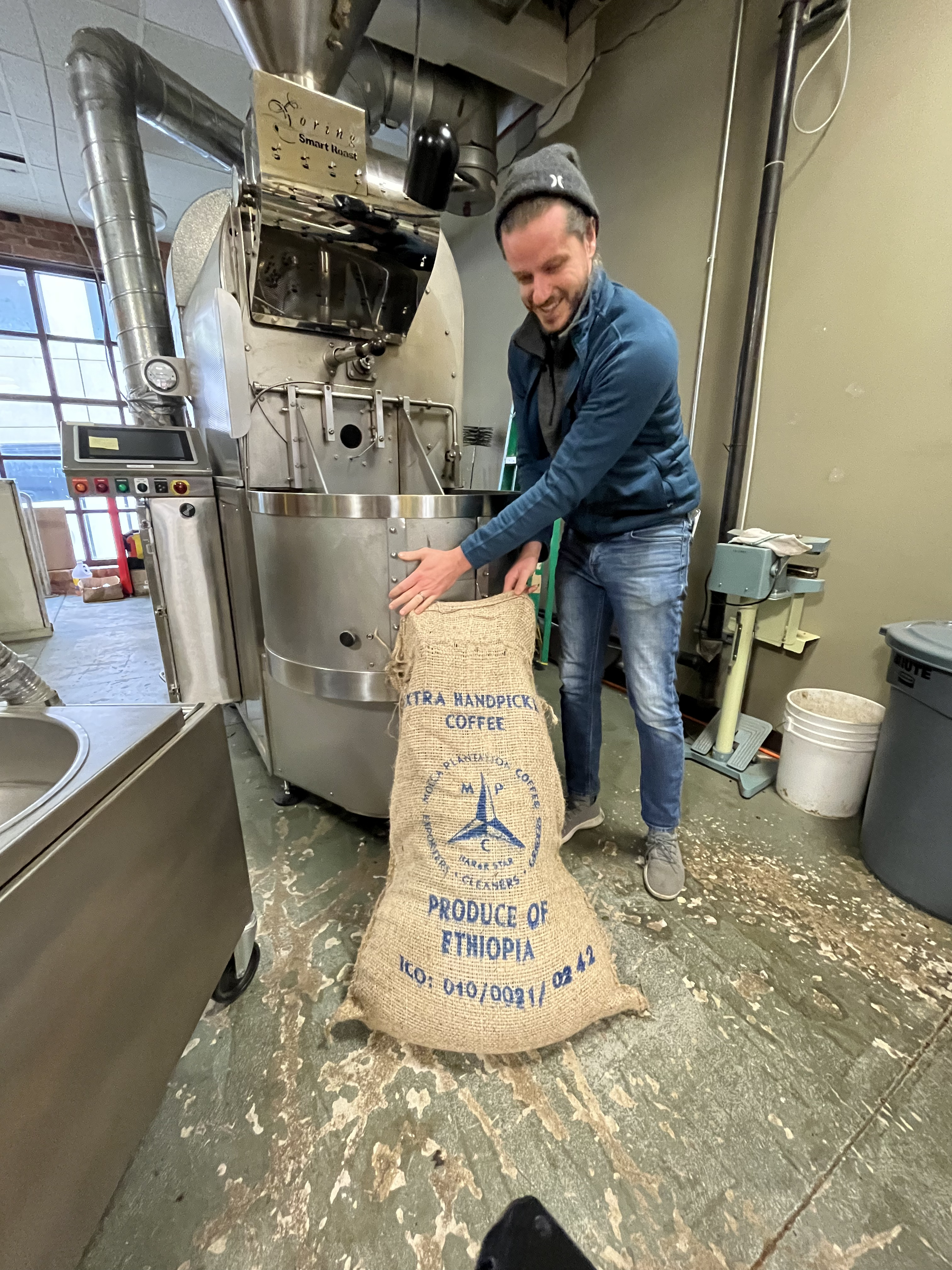
Tommy - ready to roast on the Loring
Fresh roasted Dehab's Diamond

Packaged beans, brewed cup, ready to go!


Wednesday, August 31, 2022

Coffee Roasters Guild Retreat Returns!

Aug. 25 - 28, 2022: 

For the first time since COVID, the Coffee Roasters Guild returned to the peaceful shores of Lake Delavan in Wisconsin for a weekend of fun designed specifically for coffee roasters. 

The core event running throughout the three-day event is the team challenge. This year it was named "Shapeshifter", since the challenge was to pick a single origin green coffee and roast it to perfection for an espresso and for a pour-over. To provide the roasters maximum options, another key feature of the retreat is the roasting tent, equipped with a roaster from probably twenty different manufacturers. It is truly a sight to behold! 


 There are side-events throughout the weekend. Some serious, like the workshops. Each attendee is allowed to go to three or four. I chose two that included cupping. These two workshops in addition to the cupping I did with my team for the roasting challenge made it a great experience for cupping.
I felt fortunate to be invited to assist with teaching a cupping class, "Identifying Defects" led by Todd Arnette, director of education at CQI and owner/founder of Academy of Excellence in Williamsburg, VA. He and his co-instructor, Camila Khalife, put in tons of time to find the quantity of defects needed to produce enough cups for two sessions of 30 students each to have this amazing opportunity to taste and identify defects in the cup. 
The experience culminates, appropriately, around the campfire on the final night when the winning team is announced. The suspense has been building all weekend, as many yearn to have their names engraved on the trophy. A few roasters' names are even on the trophy three times already! This year it was "6th sense" which won -- by only a fraction of a point, putting my team, "the Reactionaries" in second place. I'll have to return next year!


Tuesday, June 14, 2022

Q Grader Calibration Passed!

 June 14, 2022

It's nerve-wracking, no way around it, but a dozen of us coffee professionals found our way to Atlas Coffee Importers in Seattle, Washington last Friday, June 10, 2022, for an Arabica Q Grader calibration. We submitted ourselves to scrutiny by our instructor and comparison to our peers to see if we are qualified to be dubbed again as "licensed Q Graders" -- coffee tasters who can be trusted to identify defects and describe coffees using internationally accepted language and scoring. Ultimately, to be qualified to evaluate fair prices for coffee.

The good news: I passed!! But there's a lot more behind this story.

I first attempted to become a Q Grader in 2011 with Kelly Peltier-Amoroso at SCA's (former) office in Long Beach, CA. I remember it well. She was a great instructor, but as is common on "the first attempt", I failed about 5 of the required 21 sensory tests. I paid for and traveled to re-take exams and eventually successfully passed all tests in 2013. Since you have to re-calibrate every three years to stay certified, in 2022, I am on my third calibration. I failed my first attempt in October 2021, when I tried to calibrate immediately following SCA New Orleans. I needed to practice identifying "CQI defects". The only tastes that qualify as defects at CQI are phenol, ferment, mold and potato. 

After I scheduled my re-calibration for June 10, I started practicing in April. I bought 'low grade' specialty coffees and a few commercial grade coffees. I started brewing and tasting cups next to each other. At first I used sets of two and three (for ease and speed), and towards the end, I set-up sets of five to be ready for the exam. In May I started spiking a cup with my hacked "recipes" for defects. Phenol = Maxwell House Light Roast; Ferment = brine from sauerkraut, etc. Thanks to family members for helping me with "cup mixing" to create blind tests!

I got in touch with long-time coffee friend and customer, Teresa Pilarz, founder of Espresso Elevado, who kindly leant me her Le Nez du Cafe set. I practiced intensely with eight of the vials of "bad smells". 

What helped the most was advice and tips on defect "detection, identification, description" from Todd Arnette, CQI's director of education. I wrote to him after my unhappy result in October 2021, explaining what I was pretty sure had been my downfall (defect identification), and appreciated his support.

My instructors for Q training have also been supportive. Drew Billups, director of education at Atlas, was awesome. Other previous instructors include Jodi Dowell, Rob Stephenson and, as mentioned above, Kelly Peltier-Amoroso. 

Monday, May 24, 2021

Re-building Downtown Coffee Demand

Madcap Coffee at 1413 Farmer St., Detroit, MI

Last week I had the opportunity to visit two high-end cafes in downtown Detroit. I saw for the first time with my own eyes what Artisan's big-city customers have been reporting for the past 17 months - demand and foot-traffic in downtown is down, while demand in the 'burbs is good. In the urban centers, cafes are surrounded by office buildings now emptied of thousands of workers. Office-workers who used to flock to a nearby cafe on a break now work from home. Often, as is the case in Detroit, home is in the suburbs, not downtown. 

Dessert Oasis Coffee Roasters at 1220 Gratiot, Detroit, MI

My visits last week bring hope! Madcap at 1413 Farmer Street and Dessert Oasis Coffee Roasters at 1220 Griswold St. are doing a great job opening up and attracting the residents who have been there all along and workers who are starting to return to downtown Detroit! (See more photos at the end of this post.)

Artisan's customers on the West coast, especially San Francisco, have reported similar hard times for their cafes in central, downtown locations. New York was hard hit also, but differs depending on the neighborhood. Mid-town cafes are near residential areas, and therefore attracting some decent foot-traffic. However downtown (financial district) cafes are further away from those home-offices. Many downtown Manhattan office-workers come from Connecticut or New Jersey, not to mention Brooklyn and other boroughs. So we see the empty seats and tables next to the skyscrapers. Meanwhile on main street in places like Hartford and Greenwich, CT, high-end cafes are having a record year.   


Madcap Detroit - interior - opening up next month!

Dessert Oasis Coffee Roasters has a funky, grundge vibe.

Located at 1220 Griswold St in the center of Detroit.

Two group Slayer espresso machine at DOCR

Offering high-end, single origin coffee from Rwanda.

DOCR serving just what every downtown worker needs!


Tuesday, May 4, 2021

Joel Arusha Tapped to Help A Non-profit Enter the Coffee Market in Rwanda

One of the greatest joys for me as a business owner is to see that some encouragement I gave to others, especially young people, helps them build a career in coffee. Joel Arusha is an example of this as he starts a new position this month within a well-known non-profit. Joel will be leading the non-profit's entrance into the coffee sector! The organization has a reputation for helping subsistence farmers in many countries in East Africa move themselves above the poverty line and feed their families. In my travels, I often meet the staff from this group. They all seem to be young, bright, energetic professionals dedicated to their work and ready to make the world a better place.

Thus I always encouraged my friend Joel to be persistent when he was first applying for the job. I knew Joel would be a great fit. Eventually, after seven interviews Joel was offered a procurement position. This is significant, as he was responsible for purchase of critical supplies like the fertilizers that the organization distributes to smallholders.

I first met Joel in 2015 through a "Farm to Cup" program organized by a consortium of universities: Washington State University, Michigan State University (MSU) and University of RwandaSix students from the U.S. universities traveled to Rwanda and met up there with six Rwandan student-counterparts. I was one of the three students selected to go from MSU. Joel was one of the Rwandan agri-business students selected. This is the same program where I met Grace Izerwe. (Click here for previous blogpost.)

UR students Joel, Grace and Samantha in 2015

Joel (far right) hanging out at the ConneXion Cafe in Huye - 2015
After I started importing coffee from Rwanda I began hiring Joel frequently as a translator and assistant for trainings and other projects. He would somehow fit this work in during his days off from work. In 2019, Joel also translated for one of Artisan's customers, Andrew Timko, who came to Rwanda to consult with Kopakama cooperative on soil rejuvenation. At the same time, Joel would co-lead trainings at the dry mill in Lean and coffee cupping sessions. Joel's passion for the coffee industry was so evident. He would often say, "I love this industry so much. Some day I have to work in coffee."

In 2019 Joel started his masters in Agri-business at University of Rwanda. He selected a research topic in coffee, (of course), namely "Effects of Payment Modalities on Coffee Productivity in Rwanda." I was excited about this topic and the results of the data analysis and farmer interviews that Joel conducted.

In 2020, Joel started his own coffee company, Sun Coffee Exports and Roasting, and he started a youth cooperative near his hometown of Huye -- all while holding down his full-time demanding job in procurement at the non-profit.

At about the same time that Joel was putting the final touches on his masters thesis, he noticed the posting for an internal position: "Market Access Entrepreneur". He also noticed the description said the organization encouraged applicants with interest in the coffee sector to apply, which was unusual, since the organization had always only worked on food crops in the past, like rice, maize and beans. Never export crops like coffee. 
I was excited as I heard about this. Having a pro-farmer, global, well recognized non-profit organization in the coffee sector in Rwanda would be positive. I was even more excited when just three weeks ago Joel announced he had been selected for the position and was transitioning fast into his new role. Congratulations Joel!

As you can tell by this story, Joel is an amazing individual with incredible energy, focus and drive. We recognize that he would be successful at anything he puts his mind to whether we were there "encouraging" or not. At Artisan Coffee Imports, we just feel fortunate to be part of one more young professional's exciting entry into a full-time coffee career.
Joel (right) translating during Lean at Origin for dry mill management. 2019.

Owner of the well-known Chez Lando Hotel in Kigali talks to Joel and another student. 2015.


Friday, April 23, 2021

Grace Izerwe Lands New Position at Kopakama Cooperative


Earlier this month a colleague and friend, Grace Izerwe, started her new role as Chief Production Officer at Kopakama Cooperative in Rutsiro District, Western Province, Rwanda. She is certainly among the first women to hold this high-level position in a cooperative in Rwanda! 

For the past year, Grace has been a dedicated Quality Control Intern for Artisan Coffee. This means she was working without a salary, receiving only compensation for her expenses as she fulfilled a wide variety of duties supporting all the processes at Kopakama: from farm to washing station to cupping lab to export.

The fact that a large, respected cooperative has now recognized her considerable skills and talents in coffee agronomy, quality control at many points in the supply chain and her agri-business background is a wonderful time to pause and say "thank you" and "good luck"!

I first met Grace in May 2015 during a unique and impactful "Farm to Cup" program organized by a consortium of universities: Washington State University (WSU), Michigan State University (MSU) and the University of Rwanda (UR). Six students from the U.S. universities traveled to Rwanda with a professor from WSU and met up there with six Rwandan student-counterparts, and Rwandan educators. I was one of the three students selected to go from MSU. Grace was one of the Rwandan agri-business students selected. I had the good fortune to be assigned to work with Grace as a field research partner.


2015 "Farm to Cup" students. Grace (arrow), Ruth Ann (far right)

Grace graduated soon after the Farm to Cup program ended and a year later she got married! Next came two darling children, Keila in 2017 and Kent in 2018. For someone with Grace's energy and drive, this was still not enough. Throughout her early years of marriage, she would occasionally work for Artisan during my travels to Rwanda, translating both verbally and in writing. Eventually, in 2019, she told me she would like a career in coffee! 

Grace's strong interest in working with farmers and getting hands-on experience in coffee agronomy coincided with my recognition of an acute need at Kopakama.  This cooperative supplying Artisan's green coffee desperately needed more support in the quality control area. In January 2020 I proposed Artisan's first "Quality Control Intern" program to Kopakama's leadership. I was delighted when they agreed. Grace started in March 2020 and within two weeks, I believe, the Coronavirus lock-downs started! All buses between the capital city, Kigali, and the rural areas were stopped. Grace was forced to stay at home for nearly two months. During this time she conducted phone interviews for Artisan with the farmers of the Ejo Heza women's group. She assessed their opinions of Artisan's latest program (the 300 Club) and overall impacts of COVID19.


Finally in June 2020 she was able to return and continue working with Kopakama's staff. She participated deeply in all the steps of the coffee value chain from harvest, to de-pulping, to drying, to all the export steps. She also became a master of sample roasting and cupping. Grace's assistance was becoming more and more valuable to me as the importer since I was "stranded" on the US side of the ocean.  I was unable to travel to visit, as I normally would, but Grace could give me detailed reports in fluent English and send photos. The photos! We've discovered Grace could easily have a second career as a photographer. 


In December 2019 Kopakama posted several open positions, and Grace submitted her application for Chief Production Officer. At the end of March she was one of three final candidates invited to take an exam on topics related to the position. Grace scored the highest, and the position was offered to her! Congratulations!

"Now the real work begins," as they say. Her first week on the job was marked by an auspicious event. Kopakama was visited by the Permanent Secretary of the Ministry of Agriculture. Grace, along with other leaders of the cooperative, participated in the formal meeting and tour of Kopkama's dry mill. The Secretary and local mayor were there to show there support for the coffee industry.

Grace will face many challenges working in a rural area, finding work-life balance as a parent of young children and tackling the issues that seem endless in the coffee sector in Rwanda. But she is well prepared and will certainly continue to benefit many farmers, colleagues and organizations in her career - Artisan Coffee Imports included, we hope!


Monday, February 1, 2021

Lean Introduction Video Available to Producers

Feb. 1, 2021

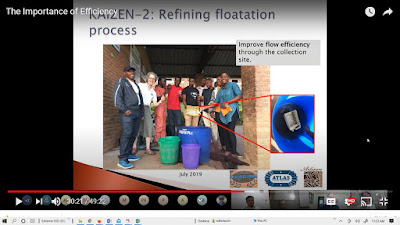
Thanks to a smart initiative by and invitation from Atlas Coffee Importers, our company offered an introduction to our copyrighted "Lean at Origin" training on-line to a global audience of producers. Most of them were cooperative leaders. The Sept. 16, 2020 webinar was the first in a four-part series Atlas produced, which included seminars on marketing, quality control for sample roasting, and "flavor formation in natural and honey-processing."

Our 50 minute session, titled "The Importance of Efficiency in Coffee Production" is available to view on YouTube: https://youtu.be/Jb0-s65VFAY . The video is thanks to the technical team and everyone at Atlas, but especially Drew Billups, Director of Education and Quality Control.

The webinar starts with emphasizing that the purpose of adopting a "Lean" culture for coffee processing is primarily to allow us to pay farmers more. It is our strong belief at Artisan Coffee Imports that by 2025, Lean concepts will transform the coffee supply chain. We started teaching Lean in 2015 and predicted back then that within 10 years lean principles at origin will transform the coffee supply chain, just as it has become the "bread and butter" of other global supply chains like automotive and aerospace.

Why is this operations management practice so compelling? Because it embraces what we all know as leaders makes organizations stronger: worker empowerment, growth and innovation, data-driven decision-making and teamwork. These are only a few of the many key principles that allow companies with a "Lean" culture to outperform their competitors. Toyota Motor Co. headquartered in Japan, is known as the world's best expert in "Lean". Not coincidentally, they are also the most profitable automaker on the planet.

Curious? Learn more by clicking here and listening for a few minutes to how this powerful training can help coffee producers operationalize Lean. We use an example: Kopakama cooperative in Rwanda.

Where has "Lean at Origin" been implemented? We've had the honor to train about seven coffee-producing organizations, both cooperatively and private owned, in three countries: Rwanda, Burundi and D.R. Congo. The training has been most completely adopted at Kopakama, where the efficiency concepts were also brought to the dry mill manager and staff. In D.R. Congo, we were pleased to offer the training as a tool to help the cooperative staff adapt their operations to include not just women and frontline workers, but also people who are amputees and landmine victims. Diversity training was easily added to that customized program.

Ready to learn more? Contact Ruth Ann Church (rachurch@artisancoffeeimports.com) today to arrange a FREE introductory 30 minute, interactive webinar for your group.